Composting turns kitchen scraps and yard waste into nutrient-rich humus—but not everything belongs in your bin. Knowing the 15 things you should never compost protects your soil, reduces odors and pests, and prevents spreading pathogens, toxins, or invasive plants around your garden. This guide explains exactly what to keep out, why it matters, and what to do instead, with practical tips to keep your heap hot, healthy, and hassle-free.
If you’re gardening for resilience and want to keep moisture levels steady without overwatering, consider capturing and reusing rainwater. Systems like Aqua Tower and New Water Offer: SmartWaterBox can help support a thriving compost pile and garden during dry spells.
Table of Contents
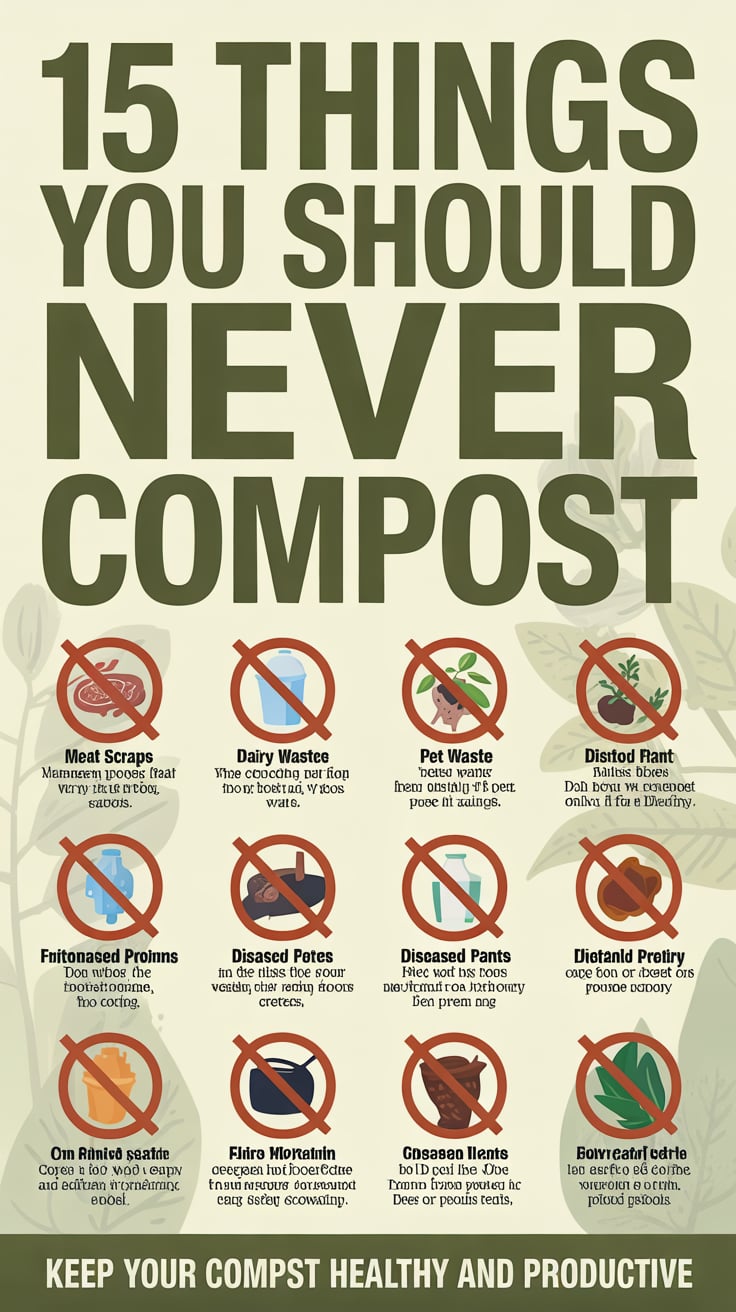
The definitive list: 15 things you should never compost
Here’s the clear, quick-reference list. In the sections that follow, you’ll find the reasons and safer alternatives for each item.
- Meat, fish, and poultry scraps
- Attract rodents and flies; decompose anaerobically, causing strong odors; can carry pathogens.
- Dairy products (milk, cheese, yogurt)
- High fat and protein content invites pests and can lead to slimy, stinky anaerobic pockets.
- Fats, oils, and grease (including fried foods)
- Smother airflow, cause rancid smells, and slow decomposition.
- Cooked, greasy, or salty leftovers
- Often oil-laden and seasoned; salt disrupts microbial life and worms.
- Pet waste from cats and dogs, and used litter
- Can harbor parasites and pathogens that survive backyard piles.
- Human feces and diapers (even “biodegradable”)
- Serious health risk; home piles rarely maintain temperatures long enough to sanitize.
- Diseased plant material (e.g., late blight, powdery mildew, rusts)
- Plant pathogens can persist and reinfect next season if your pile isn’t consistently hot.
- Invasive weeds, seed heads, and rhizomes (bindweed, Bermuda, kudzu)
- Seeds and underground stems often survive and spread when compost is applied.
- Black walnut and other juglone-rich parts (butternut, hickory)
- Contain allelopathic compounds that inhibit many plants.
- Poison ivy, oak, or sumac clippings
- Urushiol oils remain active and hazardous; handling finished compost becomes risky.
- Grass clippings or hay treated with persistent herbicides (e.g., aminopyralid)
- Residues can survive composting and damage vegetables and ornamentals.
- Sawdust or shavings from pressure-treated, painted, or stained wood
- May contain heavy metals or synthetic chemicals.
- Coal ash or charcoal briquette ash
- Coal ash contains heavy metals; many briquettes contain additives not suited for soil.
- Glossy, colored, or thermal receipt paper
- Coatings, inks, and BPA/BPS from receipts can contaminate your compost.
- Dryer lint and vacuum dust with synthetic fibers
- Microplastics don’t break down; dust can concentrate indoor pollutants.
Why “15 things you should never compost” matters for healthy soil
Healthy compost teems with life—bacteria, fungi, actinomycetes, and macro-organisms like worms and beetles—all working together under well-oxygenated, moist, and warm conditions. When you introduce high-fat animal products, pathogenic wastes, toxic residues, or tough invasive plant tissues, you upset that balance. Here’s why the “never compost” list is so important to stick to:
Pest and odor control: Animal-derived materials and greasy leftovers invite rats, raccoons, and flies. They encourage anaerobic pockets, causing putrid odors. A tidy, smell-free pile relies on airflow and balanced carbon-to-nitrogen ratios (C:N), typically around 25–30:1.
Pathogen safety: Backyard “hot composting” targets 131–160°F (55–71°C) sustained for several days to reduce pathogens. Many home piles don’t stay hot enough, long enough, throughout the mass. Items like pet waste, human waste, and diseased plants demand robust, well-managed systems or specialized treatment—not casual backyard bins.
Weed and disease control: Invasive weeds, seed heads, rhizomes, and disease-laden plant materials often survive household compost cycles. Spreading your compost unknowingly distributes future problems.
Chemical avoidance: Persistent herbicides such as aminopyralid and clopyralid can survive digestion through livestock and months in a pile, still injuring tomatoes, beans, and many ornamentals. Charcoal and coal ash, painted wood dust, and glossy or thermal papers introduce heavy metals, synthetic chemicals, and endocrine disruptors.
Soil life integrity: Compost is a microbiome inoculant and a soil conditioner. Keeping contaminants out ensures the finished material is safe for vegetables, flowers, trees, and the broader ecosystem—from beneficial microbes to pollinators and earthworms.
By honoring the 15 things you should never compost, you’re protecting your compost’s biology, your garden’s productivity, and your family’s health.
Animal-derived materials and fats create pests, odors, and anaerobic breakdown
The temptation is understandable: bones, skin, cheese rinds, and fryer oil all seem “organic,” so why not return them to the soil? Unfortunately, animal-derived scraps and fats are the most common sources of compost failures.
Meat, fish, and poultry scraps: Proteins and fats are irresistible to scavengers. Even deeply buried, they emit strong scents as they break down. In small piles or open bins, access is easy for rodents and neighborhood wildlife. As they decompose, oxygen is depleted, encouraging anaerobic bacteria, which produce foul-smelling compounds.
Dairy products: Yogurt, cheese, butter, and milk trigger similar problems. They don’t mix well with browns; instead, they form slick clumps that block airflow. Mold growth can be excessive, and the smell lingers.
Fats, oils, and grease: These coat particles in the pile, blocking air exchange. Oxygen-starved zones slow decomposition and cause rancidity. Even seemingly minor amounts (pan scrapings, oily salad leftovers) accumulate into a persistent issue.
Cooked greasy or salty leftovers: Beyond fat content, salt harms microbial activity and earthworms. Seasonings like garlic and high-vinegar marinades can briefly suppress decomposers. Processed foods with emulsifiers and additives further confuse the compost ecology.
What to do instead:
- Use a sealed Bokashi system for meat, fish, and small amounts of dairy. After fermentation, you can bury the material away from edible roots to finish breakdown in soil.
- Freeze and then trash small amounts of fat to prevent drain clogs and pests.
- Reduce waste at the source: meal plan, repurpose leftovers, or stock pantry staples that help you cook precisely and store efficiently.
Tip for odor-free bins:
- Keep kitchen scraps to plant-based peels, cores, coffee grounds, tea leaves (without plastic tea bags), eggshells in moderation, and plenty of carbon-rich browns like shredded paper, leaves, or coir. Chop materials small, and maintain moisture akin to a wrung-out sponge.
Plant diseases, allelopathy, and invasive weeds spread problems
Plants seem safer than animal products, but certain plant materials warrant a hard “no” because they carry diseases, suppress other plants, or multiply aggressively.
Diseased plant material: Tomato and potato vines infected with late blight, mildews on cucurbits, rust-infected leaves, or cankerous branches can contain spores or pathogens that survive typical backyard conditions. Unless you monitor core temperatures and turn your pile to maintain 131–160°F throughout for multiple days, it’s safer to exclude them.
Invasive weeds, seed heads, and rhizomes: Once seeds mature on weeds, or when dealing with tenacious spreaders (bindweed, Bermuda grass, horsetail, kudzu), your pile becomes a greenhouse for future outbreaks. Rhizomes and stolons can remain viable surprisingly long, especially if your pile runs cool.
Black walnut and other juglone-rich materials: Black walnut trees produce juglone, a compound toxic to many plants (notably tomatoes, potatoes, peppers, and some ornamentals). Leaves, hulls, and roots are the strongest sources, but wood and sawdust also pose risks. Composting doesn’t reliably neutralize juglone in home systems; cautious gardeners keep it out entirely.
Poison ivy, oak, and sumac: These contain urushiol oils that cause severe dermatitis. Handling active piles or finished compost contaminated with these plants can be dangerous. Burning is also hazardous, as urushiol can aerosolize.
Safer strategies:
- Bag and dispose of invasive weeds and poison ivy with your regular trash, following local rules.
- Solarize weed seeds and diseased leaves: Seal in clear plastic and leave in full sun for several weeks until thoroughly desiccated; then trash. Do not open and shake out.
- Keep separate disposal routines for black walnut debris—mulch pathways away from vegetable beds or send to municipal green waste if they accept it and use high-heat processing.
Chemical contaminants and residues derail compost biology
A handful of modern materials don’t just “not compost”—they actively harm soil life or plants even at low doses. These include ash types, treated wood dust, and herbicide-laced clippings.
Persistent herbicides in grass/hay: Aminopyralid, clopyralid, picloram, and related PIC (pyridine carboxylic acid) herbicides can pass through animals and remain active in manure, bedding, and hay for a long time. Composting often fails to neutralize them. Signs of damage after applying contaminated compost include twisted, cupped leaves on tomatoes and beans, stunting, and poor germination.
Treated or painted wood sawdust/shavings: Pressure-treated wood historically used chromated copper arsenate (CCA) and still uses copper azole or ACQ treatments; paints, stains, and varnishes add synthetic resins and heavy metals. These toxins disrupt microbial communities and can accumulate in soil.
Coal ash and charcoal briquette ash: Wood ash (from clean, untreated wood) used sparingly can supply potassium and raise pH, but coal ash contains heavy metals and sulfur. Briquette ash may include binders, borax, and igniting chemicals. Avoid adding any ash unless you’re certain it’s from clean, untreated firewood—and still use it very sparingly and only if your soil benefits from a pH boost.
Glossy and thermal receipt paper: Coated magazine paper and shiny flyers may contain clays, plastics, and dyes. Thermal receipts often contain BPA/BPS, endocrine disruptors that persist and leach. Shredded cardboard and plain, non-glossy paper are better browns.
How to guard against contamination:
- Perform the bean test: Brew a quick compost or manure tea (1 part compost to 5 parts water, steep 24 hours), then water several bean or tomato seedlings with it while others get plain water. Distorted growth or yellowing indicates possible herbicide residues.
- Source inputs carefully: Ask about herbicide use on hay, straw, and lawn clippings; prefer organic or untreated sources. Avoid unknown pallets, MDF, or painted woods.
Mid-content health note: If you manage compost around kids, pets, or edible gardens, learning basic at-home care and safety can be valuable. A resource like Home Doctor offers general household health guidance you can apply when handling soil, minor cuts, and garden-related scrapes—especially useful if you’re frequently working outdoors.
Household byproducts that sneak in with hidden risks
Some items feel harmless because they look like “paper” or “dust,” but they introduce plastics and chemicals that don’t belong in living soil.
Dryer lint: Modern wardrobes are heavy on synthetics—polyester, nylon, spandex—shedding microfibers into lint traps. These microplastics persist in compost and soil, where they can affect soil structure and be taken up by organisms. Keep lint out.
Vacuum cleaner dust: Dust concentrates indoor pollutants like flame retardants, phthalates, heavy metals from old paints, and microplastic fragments. Compost is no place for this cocktail.
Receipts and glossy paper: As covered above, thermal receipts are a major BPA/BPS source. Glossy magazines and wrapping papers can include metallic inks, plastic films, and dyes that resist breakdown.
“Compostable” plastic forks, cups, and bags: While not in our core 15, they deserve a caution. Many are designed for industrial composters with high heat and specific conditions. Backyard piles underperform for these materials, leading to fragments that linger in beds.
Better browns and fibers:
- Shred plain cardboard (remove tape), kraft paper, brown paper bags, paper egg cartons, and non-glossy office paper.
- Use leaves, straw, wood chips from untreated wood, and coir as structure-building browns.
- If you want to capture laundry microfibers upstream, use a washing machine filter or a laundry-bag filter designed for synthetics—then dispose of collected fibers in the trash.
Safe alternatives and disposal strategies that protect your system
Saying “no” is easier when you have a clear alternative. Here’s how to handle each category safely while keeping waste minimal.
Meat, dairy, and oils:
- Use sealed Bokashi fermentation for small volumes; bury the fermented mash at least 8–12 inches deep, away from edible roots, to finish breakdown anaerobically in soil.
- For larger quantities, freeze and place in trash on collection day to prevent odor.
- Render and reuse clean cooking fats where appropriate; strain and store safely.
Pet and human waste:
- Install a dedicated dog-waste digester away from food beds; it’s separate from compost and handles feces with enzymes.
- Never compost cat waste for edible gardens. Most backyard systems won’t neutralize Toxoplasma gondii.
- Diapers—regardless of claims—belong in the trash unless your municipality offers specialized processing.
Diseased plants and invasives:
- Bag and trash or use municipal green waste programs that confirm high-heat processing.
- Solarize or desiccate seeds and diseased leaves before trashing to minimize spread.
Chemical contaminants:
- Source straw and hay certified “no herbicide applied.” When in doubt, skip.
- Keep painted and treated wood out; compost only sawdust from clean, untreated lumber.
- Dispose of coal and briquette ash in the trash according to local rules; use minimal clean wood ash only if your soil benefits from the pH and potassium.
Paper and fibers:
- Choose plain, non-glossy paper and cardboard for browns.
- Trash receipts or opt for digital receipts.
Waste-reduction mindset:
- Meal planning, preserving, and smart pantry management reduce compost “problem” inputs from the start. For broader self-reliance and pantry know-how, guides like The Lost SuperFoods can help you store food wisely and lower waste across seasons.
Building a resilient compost system that stays clean and hot
A strong process makes it easy to avoid the 15 things you should never compost and still produce rich, crumbly compost fast.
Manage the C:N balance:
- Greens (nitrogen): fresh plant trimmings, coffee grounds, kitchen fruit/veg scraps.
- Browns (carbon): shredded leaves, cardboard, straw, wood chips from untreated wood.
- Aim for a C:N near 25–30:1. Practically, layer 2–3 parts browns to 1 part greens by volume. If your pile smells, add more browns and turn to aerate.
Chop, mix, and size the pile:
- Smaller pieces decompose faster. Keep a pair of shears or a compost knife by your bin.
- Build at least 3x3x3 feet for good heat retention in hot composting climates. Insulate with straw bales or leaves during cool seasons.
Monitor moisture and air:
- Keep moisture at wrung-out-sponge level. Too wet causes odors; too dry stalls microbes. A handful that holds together lightly is about right.
- Turn weekly during the hot phase; insert perforated PVC pipes or use an aeration tool if turning is hard.
Track temperature:
- Use a compost thermometer if you routinely compost big volumes. When temperatures peak above 131°F, maintain for several days, then turn. Repeat as needed.
Keep it clean:
- Place a labeled “Do Not Compost” caddy beside your kitchen scrap bucket for grease, bones, and off-limits items.
- Post the 15-item list by your bin to train family and guests.
Water-wise support:
- Consistent moisture accelerates decomposition and keeps odors down. Rain capture systems like Aqua Tower or New Water Offer: SmartWaterBox can supply chlorine-free water for your pile and garden, helping microbes thrive without tapping municipal supplies.
Self-reliance upgrades for gardeners
Composting sits at the heart of a resilient home and garden. A few supportive resources can round out your system:
Food storage and waste reduction:
- The Lost SuperFoods offers ideas to stock a practical pantry and make the most of harvests, cutting down on “problem” leftovers you’d otherwise need to exclude.
Home health and safety:
- Home Doctor covers everyday care and preparedness tips helpful for outdoor DIYers and gardeners handling soil and tools.
Water resilience:
- Aqua Tower and New Water Offer: SmartWaterBox can help maintain optimal compost moisture and keep beds thriving during dry spells.
Recommended products for compost-friendly homesteads
- Aqua Tower: Capture and store rainwater to keep piles evenly moist and gardens resilient.
- New Water Offer: SmartWaterBox: Streamlined water storage and reuse for small spaces or urban gardens.
- The Lost SuperFoods: Practical food-preservation ideas to minimize waste that doesn’t belong in your bin.
- Home Doctor: Handy at-home health guidance for busy gardeners and DIYers.
Practical examples to put it all together
After tomato harvest: If late blight struck, bag the vines instead of composting. Compost healthy plant residues with plenty of leaves and shredded cardboard for browns.
Lawn clippings source change: If your neighbor offers clippings, first ask about herbicide use, then run a bean test. If seedlings remain healthy, incorporate clippings in thin layers mixed with browns.
Fall leaf cleanup: Keep walnut leaves and hulls separate. Compost oak, maple, and fruit tree leaves readily. Mulch walnut debris on non-crop paths or dispose via municipal channels.
Household paper sorting: Keep a box for plain cardboard and brown paper. Direct all receipts and glossy flyers to the trash or recycling, according to local guidelines.
With a clean input stream and a tuned process, you’ll produce a sweet-smelling, dark, crumbly compost that powers your garden through the seasons.
Conclusion
Compost thrives on the right ingredients and fails with the wrong ones. By committing to these 15 things you should never compost—meats, dairy, oils, cooked greasy foods, pet and human waste, diseased plants, invasive weeds, juglone-bearing debris, poison ivy/oak/sumac, herbicide-tainted clippings, treated wood sawdust, coal or briquette ash, glossy or thermal papers, and synthetic-laden lint and dust—you protect your soil, your harvests, and your health. Pair those exclusions with smart alternatives, good C:N balance, proper moisture, and careful sourcing, and your pile will reward you with safe, fertile humus for years to come.
FAQ
Can I ever compost small amounts of meat or dairy?
In a standard backyard bin, no. Use a sealed Bokashi system for small amounts, then bury the fermented material away from edible roots. Do not add meat or dairy directly to your open pile.
Is wood ash safe for compost?
Use only small amounts of ash from clean, untreated firewood if your soil benefits from a pH boost. Never add coal ash or charcoal briquette ash. When in doubt, skip ash entirely.
How can I tell if my manure or compost has persistent herbicides?
Do a simple bioassay (bean test): water bean or tomato seedlings with a compost tea and compare to controls. Twisted growth suggests contamination; do not use on sensitive crops.
What about “compostable” cups and bags?
Most require industrial composting conditions and break down poorly at home, leaving fragments. Avoid adding these to backyard compost unless the packaging explicitly states it’s suitable for home compost and you’ve verified results.
Are citrus peels and onion skins on the list of 15 things you should never compost?
No, they aren’t on this list. In moderation, citrus and onion scraps are fine in a balanced pile. Chop them small and mix with plenty of browns to prevent odors and slowdowns.