
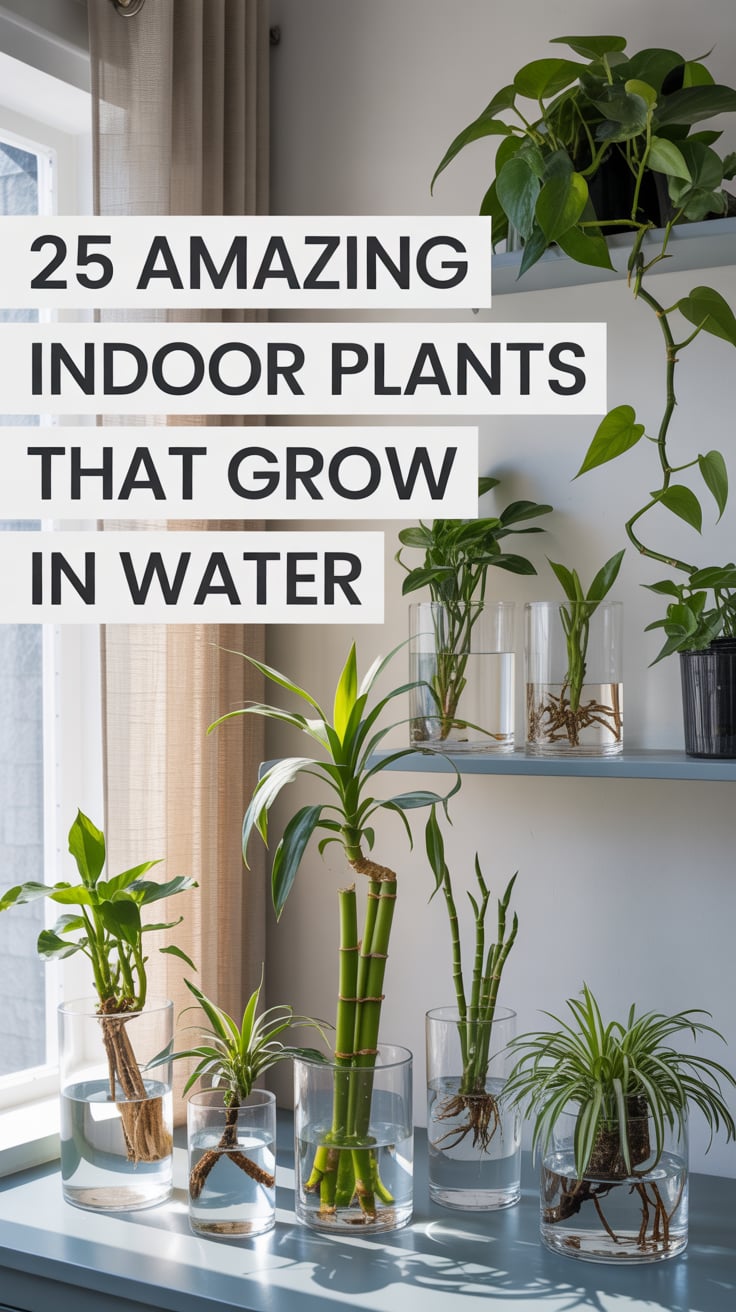
Bringing nature indoors doesn’t have to mean potting soil, messy repotting days, and fungus gnat battles. With the right approach, you can enjoy lush greenery that lives entirely in water—no soil required. In this guide, you’ll find 25 amazing indoor plants that grow in water, plus simple setup steps, care instructions, and styling ideas to keep your space clean, green, and calm.
If you want a fast, tidy way to get started, consider a beginner-friendly water-growing kit like SmartWaterBox to organize jars, cuttings, and nutrient top-ups in one place.
Table of Contents
Why choose indoor plants that grow in water
Growing plants in water (often called water culture) is an easy, low-mess alternative to soil. Instead of potting mix, your plant’s roots live in a jar, vase, or bottle filled with clean water. This style is perfect for windowsills, workspaces, bathrooms, and kitchens—anywhere you want greenery without fuss.
Key benefits:
- Cleaner than soil: Fewer chances of fungus gnats, less mess during pruning, and easy water changes.
- Low maintenance: No repotting. A quick water refresh every 1–2 weeks is usually enough.
- Space-saving: Slim vases and propagation stations fit on narrow ledges and shelves.
- Stylish: Clear glass shows off white roots; amber or colored glass adds a sculptural touch.
- Educational: Great for kids and beginners to watch rooting and growth.
How it works:
- Many houseplants and herbs can root and live in water when provided with oxygen, light, and occasional nutrients.
- Some plants thrive indefinitely in water; others do best for months to a couple of years before transitioning to semi-hydro or soil. You can choose what suits your space and patience.
- Clear glass makes it easy to inspect root health. If algae appear, simply rinse and refresh.
Water vs. hydroponics:
- True hydroponics uses nutrients, media, and sometimes pumps to actively deliver oxygen and minerals to roots.
- Water-growing for houseplants is a simplified version—roots sit in still water and you manually change water and add gentle nutrients occasionally.
- It’s ideal for decorative indoor greenery, herbs, and cuttings without the complexity of full hydroponic systems.
Tip: Use cuttings from healthy plants, or start with nursery plants that can adapt to water. For an even easier setup, an all-in-one organizer like Aqua Tower can help keep jars upright and tidy on a countertop or shelf.
Setup and supplies for water-grown houseplants
Getting started is simple and inexpensive. Most essentials are already in your kitchen, and the rest are optional upgrades you can add over time.
What you need:
- Containers: Glass jars, bottles, bud vases, propagation tubes, or small carafes. Narrow necks support stems; wide mouths suit larger cuttings.
- Water: Room-temperature tap water works for most areas. If your tap water is very hard or heavily chlorinated, consider filtered or let tap water sit out 24 hours before use.
- Pruners: Clean scissors or shears for taking cuttings at a 45-degree angle below a node.
- Support: For heavy foliage, add a stake, a narrow-neck bottle, or a simple clip to prevent toppling.
- Optional: A few drops of gentle, balanced liquid fertilizer once roots establish; activated charcoal chips at the bottom of a vase can help keep water fresh; labels for tracking plant names and start dates.
Placement:
- Bright, indirect light fuels growth without overheating jars or encouraging algae. East or north windows are excellent; south or west windows may need sheer curtains.
- Keep containers away from radiators and cold drafts.
Water care:
- Change water every 1–2 weeks. Rinse containers and roots under lukewarm water to remove film and algae.
- Top up between changes so roots stay submerged but the stem nodes above water can breathe.
- If leaves yellow or growth slows, refresh more frequently and consider a light nutrient boost.
Nutrient basics:
- After cuttings develop roots (2–4 weeks), add a very dilute houseplant fertilizer to the water occasionally. Start light; more is not better in still-water culture.
- If you see residue or smell, dilute further and increase change frequency.
Tools that make it easier:
- Multipurpose propagation stands keep glass tubes organized and attractive.
- A compact kit such as SmartWaterBox helps you streamline water changes and nutrient reminders.
- For vertical organization and to save space, Aqua Tower can be a neat option to consolidate your water-grown plants in one footprint.
25 Amazing Indoor Plants That Grow In Water: vining and foliage picks
These classic houseplants root quickly and look beautiful in clear glass. Most will live happily in water long-term if you refresh regularly and provide bright, indirect light.
- Pothos (Epipremnum aureum)
- Fast-rooting, forgiving, and stunning in trailing jars. Snip below a node; keep 2–3 nodes underwater.
- Heartleaf Philodendron (Philodendron hederaceum)
- Similar to pothos; loves bright, indirect light. Trim often to keep stems bushy.
- Monstera adansonii
- The Swiss-cheese vine roots well in water. Support stems; change water weekly to minimize algae.
- Monstera deliciosa (juvenile)
- Larger leaves take time but it adapts. Start with smaller cuttings and provide a sturdy vase.
- Lucky Bamboo (Dracaena sanderiana)
- Designed for water culture. Keep roots submerged and rinse stalks periodically.
- Spider Plant (Chlorophytum comosum)
- Place baby “spiderettes” in jars to root and grow. Trim older leaves if they brown.
- Peace Lily (Spathiphyllum)
- Transition gently by rinsing soil from roots; it will grow elegantly in water and bright shade.
- Syngonium (Arrowhead vine)
- Cut below a node and place in a slender vase. Lovely heart-shaped leaves and easy care.
- Tradescantia zebrina (Wandering Dude)
- Metallic-purple foliage shines in glass. Pinch tips for fuller growth.
- Purple Heart (Tradescantia pallida)
- Vivid purple stems root fast; thrives near a bright window, away from hot sun.
- English Ivy (Hedera helix)
- Classic, trailing look. Give it cool, bright light and keep water fresh to avoid rot.
- Coleus
- Wild color and patterned leaves. Pinch blooms to keep energy in foliage.
- Chinese Evergreen (Aglaonema)
- Sturdy stems adapt to water with gentle light. Rinse roots monthly for best health.
Care pointers for this group:
- Keep foliage out of the water line. Submerge only nodes and roots to prevent stem rot.
- Rotate containers weekly so growth stays even and stems don’t lean toward the window.
- For plants transitioning from soil (peace lily, aglaonema), wash off all potting mix to prevent cloudiness and decay.
Indoor plants that grow in water for kitchens and bright windows
Add fresh fragrance and edible greens to your home with herbs and easy regrowers. A sunny, indirect light spot near the kitchen sink works beautifully.
- Mint (Mentha spp.)
- Almost foolproof in water. Harvest often to keep stems compact and flavorful.
- Basil (Ocimum basilicum)
- Snip above leaf nodes to encourage branching. Prefers warmth and bright light.
- Oregano (Origanum vulgare)
- Fragrant and tidy in jars. Refresh water frequently to keep stems firm.
- Sage (Salvia officinalis)
- Woody stems take longer to root; once established, harvest sparingly to avoid stressing the plant.
- Rosemary (Salvia rosmarinus)
- Slow but rewarding. Use a tall, narrow bottle for stem support and bright, indirect light.
- Green Onions (Scallions)
- Place white roots in water and trim green tops as needed. Change water every few days.
- Garlic Greens
- Set a clove in a small jar for mild, oniony shoots. Snip greens; replace the clove when growth slows.
- Celery Base
- Save the bottom of a celery bunch, place it in shallow water, and watch new leaves emerge.
- ZZ Plant Stems (Zamioculcas zamiifolia)
- Slow to root but impressively resilient. Keep in bright, indirect light and be patient.
- Rubber Plant (Ficus elastica)
- Larger cuttings can root in water; use a tall vase. Give plenty of indirect light.
- Prayer Plant (Maranta leuconeura)
- Striking patterned leaves. Prefers stable warmth and consistent water changes.
- Pilea peperomioides (Chinese Money Plant) pups
- Small offsets root quickly in jars. Great for gifting once roots are strong.
Edible group tips:
- Harvest lightly at first so plants keep enough foliage to fuel growth.
- Herbs appreciate bright light—aim for an east-facing window or filtered south light.
- Replace herb cuttings every few months if vigor declines; keep a rotating “herb bar” so you always have fresh stems rooting.
Caring for indoor plants that grow in water
Routine
- Water refresh: Change water every 7–14 days. If you see cloudiness or algae sooner, refresh earlier.
- Rinsing: When changing water, gently swish roots and rinse containers. Soft brushes help remove algae film in narrow bottles.
- Trimming: Prune leggy stems above a node to encourage branching and fuller growth.
Light and temperature
- Light: Bright, indirect light is ideal. Direct sun can overheat glass and fuel algae.
- Temperature: Most water-grown houseplants are comfortable between 65–80°F (18–27°C). Avoid chills and hot drafts.
Nutrients
- Start light: Once roots form, add a small, diluted amount of balanced liquid fertilizer occasionally. Err on the side of less; you can always add a touch more later.
- Watch leaves: Pale leaves may indicate a need for nutrients; crispy browning tips can suggest too much sun or dissolved salts.
Algae control
- Placement: Keep jars out of harsh direct sun.
- Containers: Amber or opaque vessels reduce light penetration and algae growth.
- Cleaning: A quick scrub during each water change keeps glass sparkling.
Root health
- Color: Healthy roots are white to cream. Brown, mushy roots indicate rot—trim away affected parts and refresh water.
- Oxygen: Leave some stem above water for air exchange; don’t pack multiple stems too tightly.
Pests and problems
- Gnats: Far less common without soil, but they can hitchhike. Rinse leaves and containers; keep surfaces dry.
- Rot: Usually from stale water or submerged leaves. Keep foliage above water, change water often, and trim damaged sections.
Adaptation from soil
- Transition slowly for plants that come from pots. Rinse all soil away, place in clean water, and keep in gentle light for a week while they adjust.
- Expect some leaf drop as plants adapt; new growth will signal success.
Styling, display, and safety tips for water-grown plants
Design ideas
- Propagation gallery: Mount a wooden rail with glass tubes across a bright wall for a living art piece.
- Shelf rhythm: Mix tall bottles, squat jars, and ceramic bud vases for varied heights and textures.
- Bathroom spa: Peace lily and philodendron thrive in humidity; place on a shelf away from direct splash.
- Kitchen herb bar: Line up mint, basil, and green onions near a window for quick snips while cooking.
- Color play: Pair purple heart or coleus with clear glass to showcase vivid stems; choose amber for a cozy, vintage vibe.
Container creativity
- Repurpose bottles: Olive oil or vinegar bottles make elegant, narrow-neck supports for long stems.
- Pebble layer: A thin layer of rinsed pebbles or marbles stabilizes wide-mouthed vases and adds visual interest.
- Labels: Minimalist tags help track start dates and plant names—handy for rotating herb cuttings.
Safety notes
- Pet cautions: Several popular houseplants (pothos, philodendron, dieffenbachia, English ivy) are toxic if ingested. Keep out of reach of curious pets and children.
- Stability: Heavy foliage can tip slender vases. Choose weighted bases or place against a wall.
- Water spills: Set jars on coasters to protect wood surfaces and make water changes easier.
Seasonal tweaks
- Winter: Light levels drop—move plants closer to windows and reduce nutrient additions.
- Summer: Increase water changes in heat; watch for algae and rinse more frequently.
Simple starter plan and helpful tools
If you’re new to water-growing, use this quick, repeatable plan to build confidence.
Week 1
- Take 3–5 easy cuttings (pothos, mint, philodendron).
- Trim just below a node, remove lower leaves, and place in jars filled with room-temp water.
- Set jars in bright, indirect light; label with plant names and dates.
Week 2–3
- Change water every 7–10 days; rinse jars and roots.
- When roots reach 1–2 inches, add a very light dose of balanced liquid fertilizer.
Week 4 and beyond
- Top up water as needed; trim stems to keep growth compact.
- Start a second wave of cuttings so you always have fresh, vigorous plants.
Recommended starter tools
- A tidy organizer like SmartWaterBox can help you keep jars, labels, and water-change schedules in one place.
- A space-saving stand such as Aqua Tower makes it easier to display multiple water-grown plants neatly, especially in small apartments.
Ready to begin?
- Choose one trailing plant and one herb for fast results.
- Rinse, refresh, and rotate weekly.
- For a streamlined start, consider Aqua Tower or SmartWaterBox to keep your setup neat and easy to maintain.
Conclusion
You don’t need potting soil or a dedicated grow room to enjoy lush, living decor. With these 25 amazing indoor plants that grow in water, a few jars, and a window with soft light, you can create a clean, calm oasis that thrives on simple routines. Start with forgiving favorites like pothos, mint, and philodendron, refresh water regularly, and expand into bigger-leaved statement cuttings as your confidence grows. Water-growing keeps care simple, makes styling fun, and turns everyday containers into living art.
FAQ
What are the easiest indoor plants that grow in water for beginners?
Pothos, heartleaf philodendron, mint, and spider plant babies root fast and adapt well to life in water with minimal effort.
How often should I change the water for plants growing in jars?
Every 1–2 weeks is a good baseline. If the water looks cloudy, smells off, or algae appears sooner, refresh earlier and rinse the roots and container.
Can plants live in water forever, or should I move them to soil?
Many can live in water long-term with periodic nutrient additions and clean water. Others, especially woody herbs, may do best for several months before you rotate in fresh cuttings or transition to soil or semi-hydro.
Do I need fertilizer for water-grown houseplants?
After roots are established, a very dilute, balanced liquid fertilizer helps maintain healthy growth. Start with small amounts occasionally and adjust based on leaf color and vigor.
Why are my stems turning mushy or leaves yellowing?
Mushy stems usually mean rot from stale water or submerged leaves—trim damaged parts and refresh more often. Yellowing leaves may indicate low light, nutrient needs, or natural aging; improve light, add a gentle nutrient dose, and continue routine water changes.